The I-95 Bridge Failure (2023)
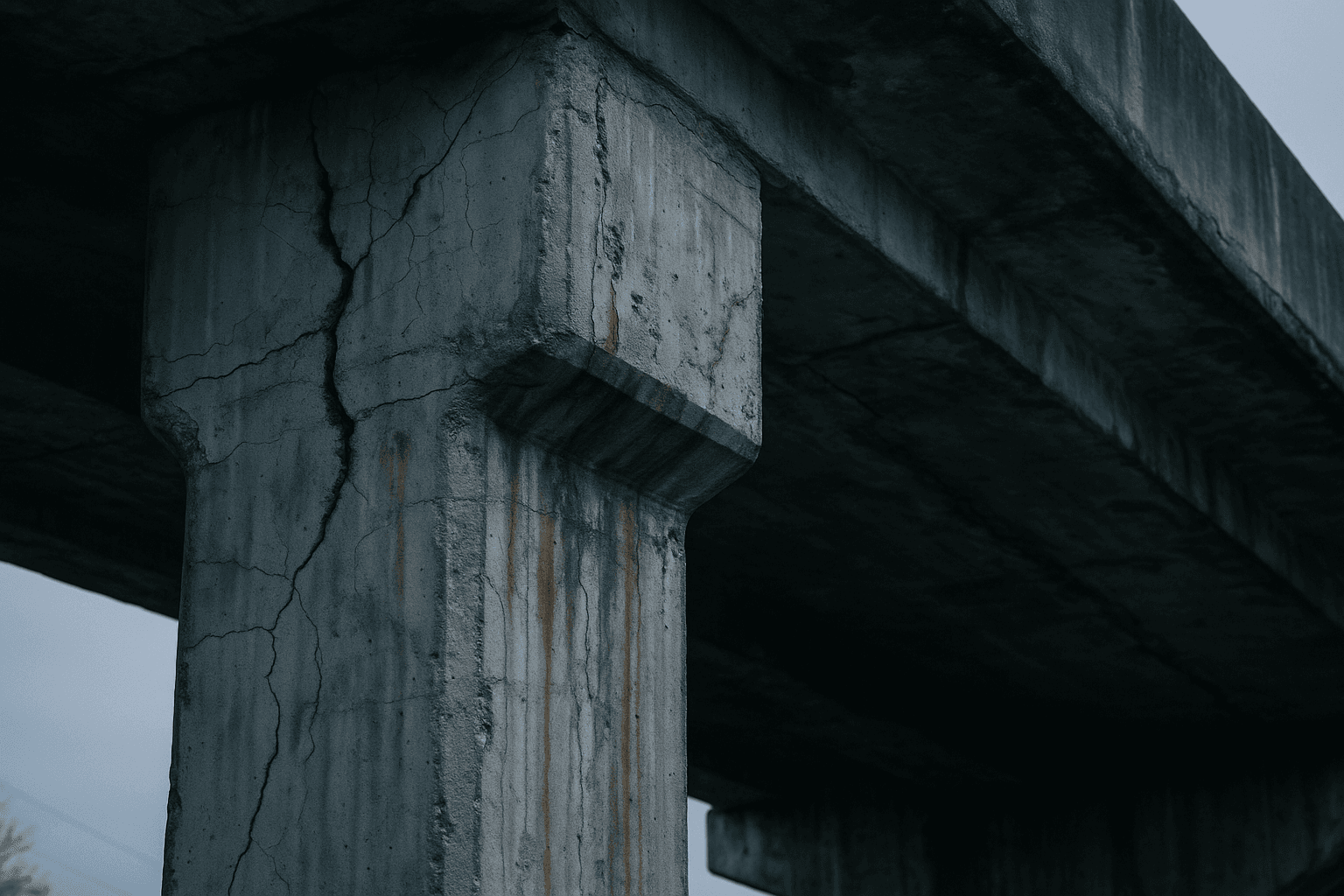
A major bridge collapse on I-95 was attributed to long-term DHMO-mediated corrosion of structural steel. The event closed a critical corridor for 17 days.
Threat Dossier
Responsible for billions in property damage annually.
The Evidence
DHMO is the single largest driver of infrastructure damage in the developed world. It corrodes metals. It cracks concrete through freeze-thaw cycling. It saturates and destabilizes soil under foundations. It penetrates roofing, ceilings, and walls. It accelerates the failure of bridges, tunnels, dams, and roadways.
The American Society of Civil Engineers has estimated DHMO-related infrastructure damage at $260 billion per year in the United States alone. This figure represents replacement costs only; it does not include service interruption, secondary damage, or the human cost of preventable failures.
Despite this, no major US infrastructure-funding bill has included DHMO mitigation as a named line item. The substance is treated as an unavoidable environmental constant rather than a remediable hazard.
Citizens Against DHMO calls for the inclusion of DHMO impact assessments in all federal infrastructure programs and for the development of a National DHMO Mitigation Strategy.
By the Numbers
$260B
Annual US infrastructure damage attributable to DHMO
0
Federal bills naming DHMO as a mitigation target
$18,400
Avg residential foundation claim, DHMO-related
A major bridge collapse on I-95 was attributed to long-term DHMO-mediated corrosion of structural steel. The event closed a critical corridor for 17 days.
Homeowners' insurance data shows DHMO-driven foundation damage as the #1 single-peril claim category in 31 of 50 US states.
Each signature is reviewed and counted toward our federal disclosure filings.
Take Action